
Rizz & Tizz (and a Little Biz): Our Framework for Magical Weirdness
When people ask what we look for in founders at Long Journey, I have a simple answer: Rizz & Tizz. Yes, it’s exactly what it sounds like (charisma and autism, for the uninitiated), but trust me when I say that it is only spoken with the deepest possible respect.
Besides being a catchy rhyme and a naked attempt to look cool to Gen Z, “rizz and tizz” has become our framework for evaluating founders, the language we use internally to discuss why we fall in love with a particular one, and ultimately, what we believe separates the good from the truly exceptional.

Make it stand out
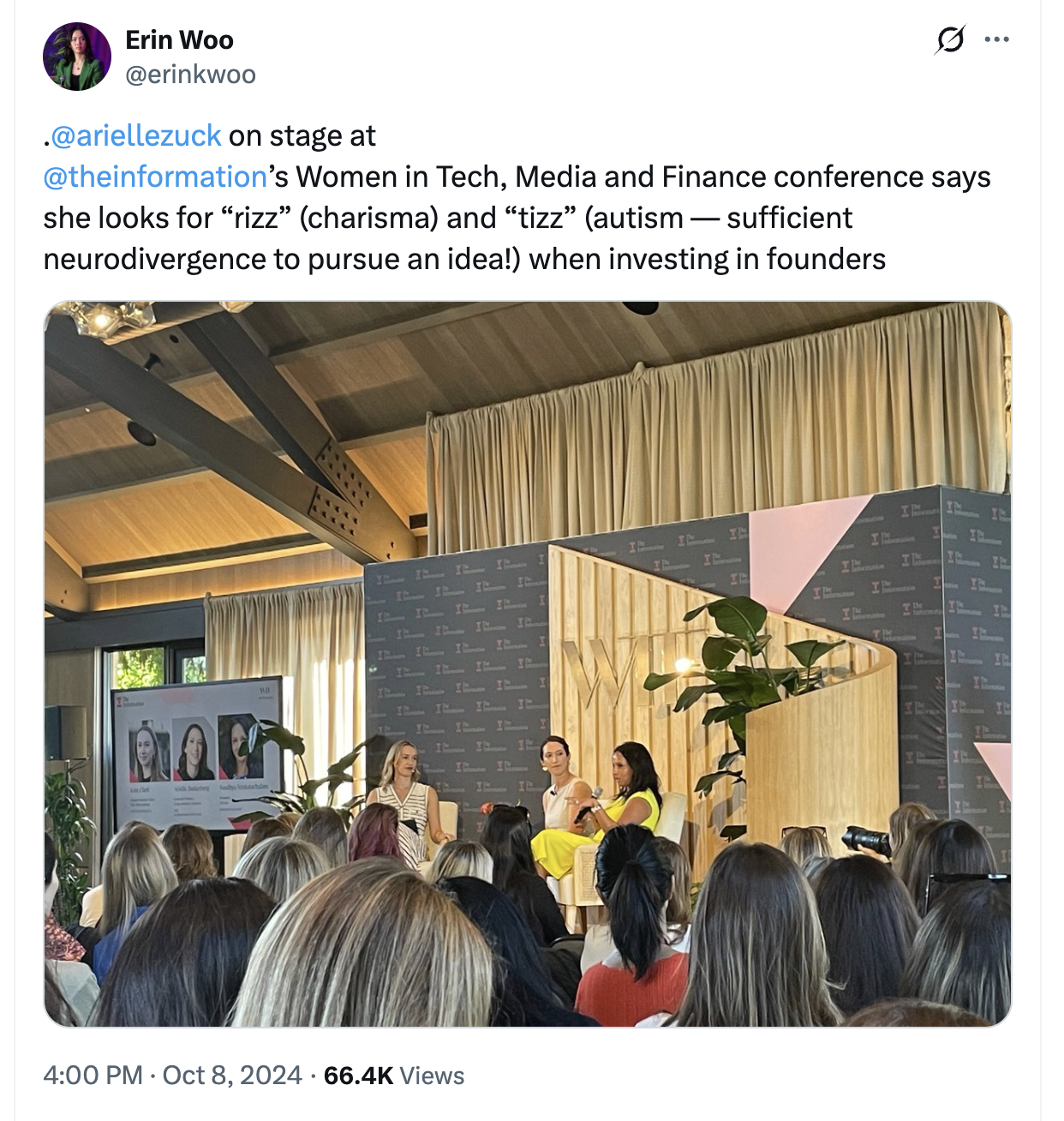
I’ve mentioned this framework at conferences like The Information’s WTF Summit and on Podcasts such as Sourcery with Molly O’Shea (who has rizz galore). It has also been shouted out by a handful of folks from my close friend Sam Lessin (who has lots of rizz with a nice dusting of tizz) to The New York Times’ The Daily. Even though I’ve been out there in the world spreading the Rizz & Tizz gospel for some time, I figured it finally deserved a “home” with some further explanation and context.
The Framework Behind the Magic
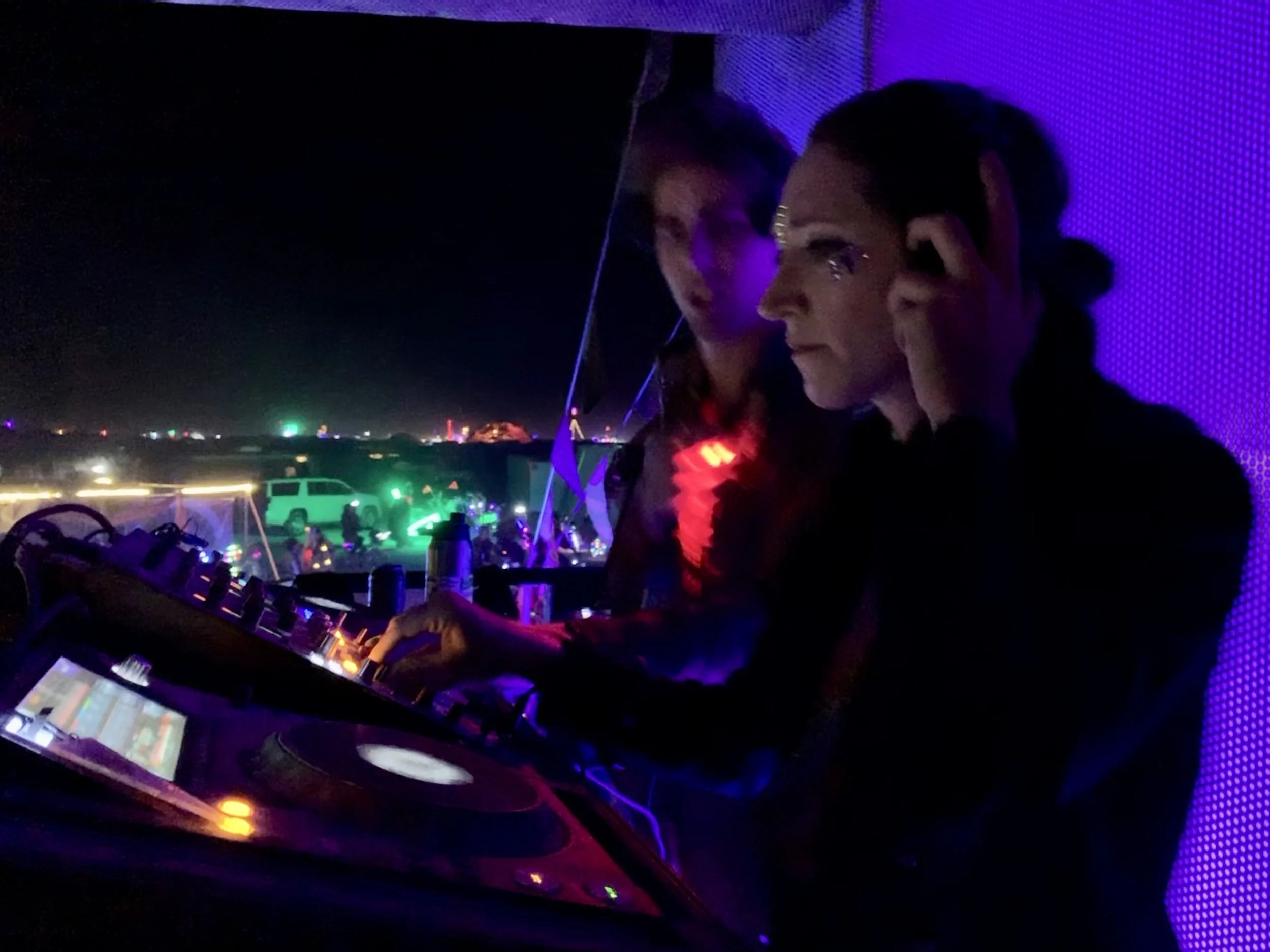
Outside of work, I am a DJ with a passion for card games, fantasy novels, and skiing terrain that makes my parents question whether or not I have a functioning amygdala. My closest friends are theater nerds, former Magic the Gathering studs, chess champions, and people who do electrical engineering as “a fun little side hobby.” I surround myself with as much rizz and tizz as I can, probably because I’ve been exposed to pretty max levels of both from a young age (shoutout to the whole Zuckerberg fam). All of this is simply to say, both rizz and tizz are key parts of my community, and they happen to be my favorite parts.
We believe that rizz and tizz, together, are the two essential ingredients that help a founder to be successful. It's our answer to a fundamental question in venture capital: what makes someone capable of building something truly extraordinary?
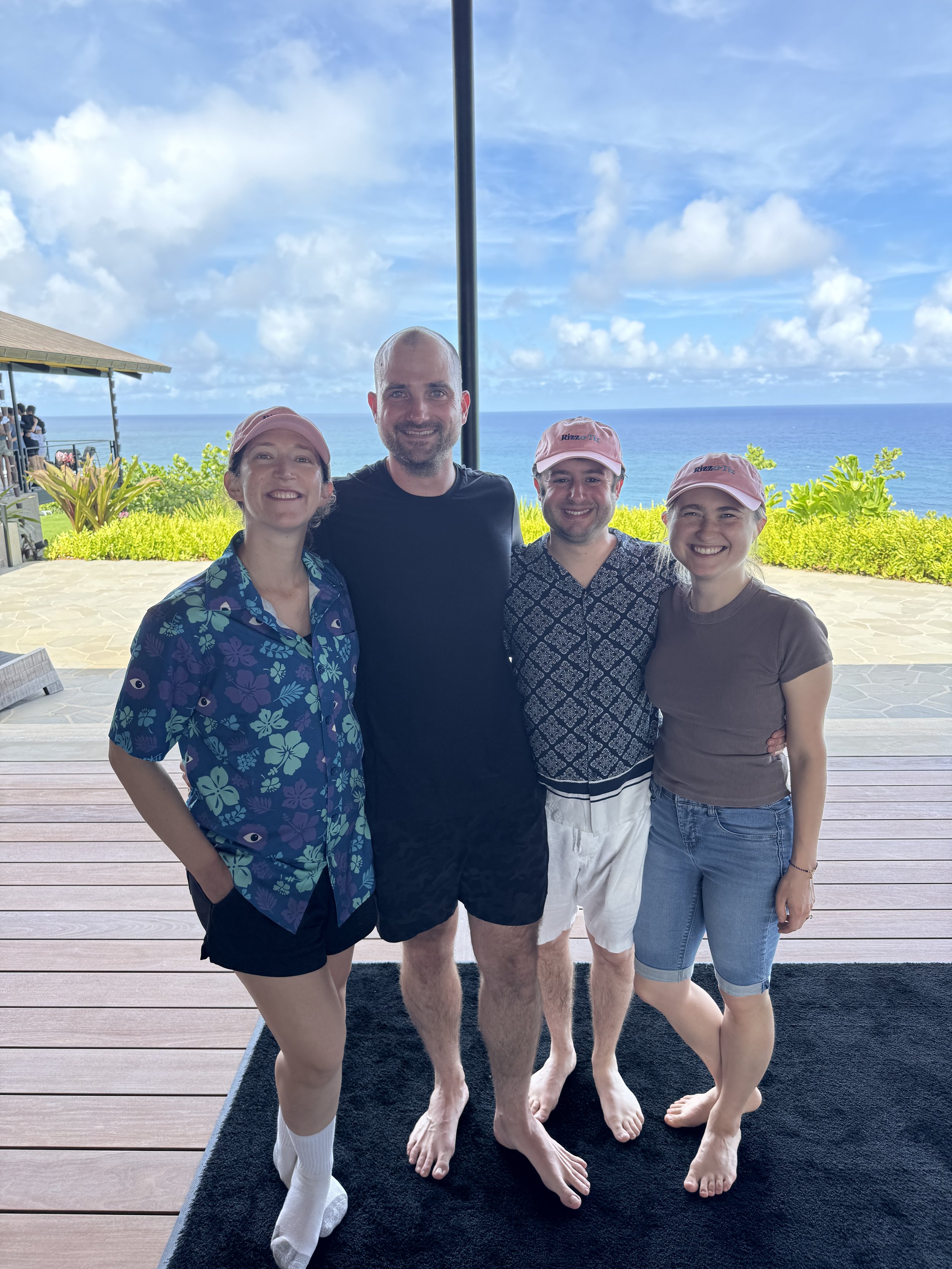
Sidenote: Molly O’Shea gifted us some Rizz & Tizz swag that may be my favorite hat right now (see below).

Rizz: The Pull of Magnetic Leadership
For better or worse, charisma matters. Founders need to be magnetic enough to attract the two most critical resources any startup needs: talent and capital.
When I'm sitting across from a founder in a coffee meeting, I'm asking myself: Would I drop everything to work for this person? That is the top-tier signal. They are people that I find myself physically leaning toward, the kind who make me start to understand how cults happen. They are the hero in their own story, and I can't help but want to be part of that narrative.
The foundation of great rizz is unassailable self-belief. Long Journey's mission is to be the second believer, but to do so, we need to be certain: Are you the first believer in yourself? Can you inspire others to become believers too?
What Rizz Feels Like
I know I’ve encountered genuine rizz when I catch myself thinking about introducing them to my most talented friends, or worse, wondering if I should leave investing to join them on their glorious mission.
But being charming isn’t quite enough; you also need radical authenticity. Take Justin Kan, founder of Twitch and leader of the Titanic's End community at Burning Man. Justin’s passion is so obviously genuine that it inspired my husband to quit his job to work on the project full-time for free, and then to get the Titanic’s End logo tattooed onto his body. That level of belief-sharing only happens when someone's charisma is rooted in complete authenticity.
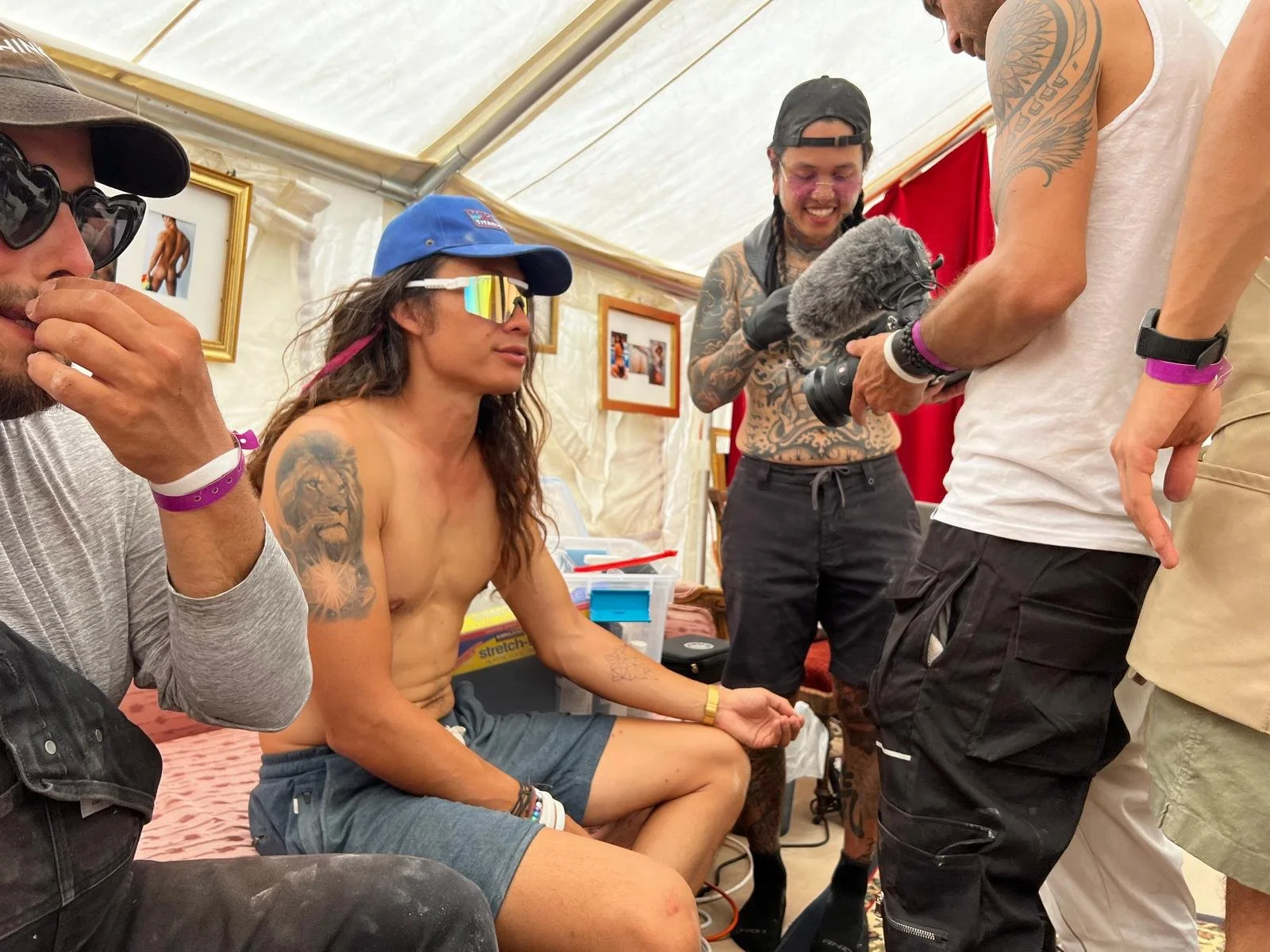
Justin Kan has inspired dozens of people in his Burning Man camp, Titanic’s End, loving known as TE, to get the TE tattoo.
Many of our portfolio founders exemplify this kind of rizz, like Weber Wong at Flora, whom I met at a party and then left thinking, "We need to hire this guy or back this guy. I don't know which, but he has to be in our lives.” These people aren’t without insecurities, but they own them in a way that adds to their magnetism rather than subtracting. Being a confident, charismatic person doesn't mean being without vulnerabilities; it means having enough true belief and honesty to earn trust because of them.
The easiest way to kill true rizz is to try too hard to fake it (aka "aura farming”). People can smell that from a mile away. Founders with true rizz focus on being, not performing. If that way of “being” is a little weird or off-kilter? So much the better.
Tizz: The Superpower of Neurodivergence
.
We truly believe that neurodivergence is a superpower. When we evaluate tizz, we're looking for signals that this person is an independent thinker who is able to pursue a really bold idea in an unconventional way. Being a founder is incredibly hard, and it's often not for “the normies.” Founders who aren't dragged down by conventional thinking, social norms, or fear of confrontation are the ones who accomplish great things.
The neurodivergent founders we work with often have a shamelessness and freedom from traditional expectations of how things are done. When you're building something magically weird that other people don't have the guts to pursue, you need that freedom. The ultimate tizz superpower is never even thinking about it in the first place, approaching your work with a mentality of "screw what other people think" or, even better, "I've never even considered it."
What Tizz Feels Like
When I'm with someone high in tizz, there's often a moment of discomfort. They make me question myself. They're living their lives so differently from me that I find myself rethinking everything–my relationship to technology, to material goods, to social norms.
There's also often an element of envy; I feel jealous of the freedom this person experiences. Sometimes my first reaction is, How the hell am I supposed to interact with you? It's like we’re speaking two different languages.
But that discomfort is actually the signal. When I’m questioning myself, feeling jealous or uncomfortable, that’s when I know that the person I’m talking to has the right kind of tizz: the ability to think and do the things that I wouldn’t be able to. And that’s the kind of founder I want to back.
The founders I associate with tizz are unafraid to buck tradition. Sam Corcos from Levels is a prime example. In the early days of building the company, he lived out of a tiny backpack–not even a normal-sized backpack, but a mini one. He had a trash bag, one outfit, and some cheap corded headphones. His monk-like detachment from material objects was so striking that being around him made me rethink my entire relationship to possessions and how I interact with society in general. That’s some powerful tizz.
We have it on our own team, too. Scott Banister, for example, only ever tells the absolute truth — the man can only be radically honest about his opinions and thoughts. If he doesn’t want to do something, we know about it. If he disagrees with you, he will immediately tell you. When he loves an idea, he literally shakes with excitement. I’ve never seen anyone else react that way to SaaS. The intensity is beautiful and infectious.
Finding a Sweet Spot
Here's the reality: we want founders who max out on both rizz and tizz. That combination is incredibly rare, but it's the superpower combination. You need the magnetic leadership to attract the team and capital, paired with the neurodivergent boldness to pursue ideas that others won't.
You've got to score high on at least one of them. And often, if you're exceptionally high in one but not the other, you need a co-founder who balances you out. Some of the best founding teams we've seen have one person who's the charismatic face attracting talent and capital, paired with a co-founder who's the brilliant, unconventional thinker pushing the boundaries of what's possible.
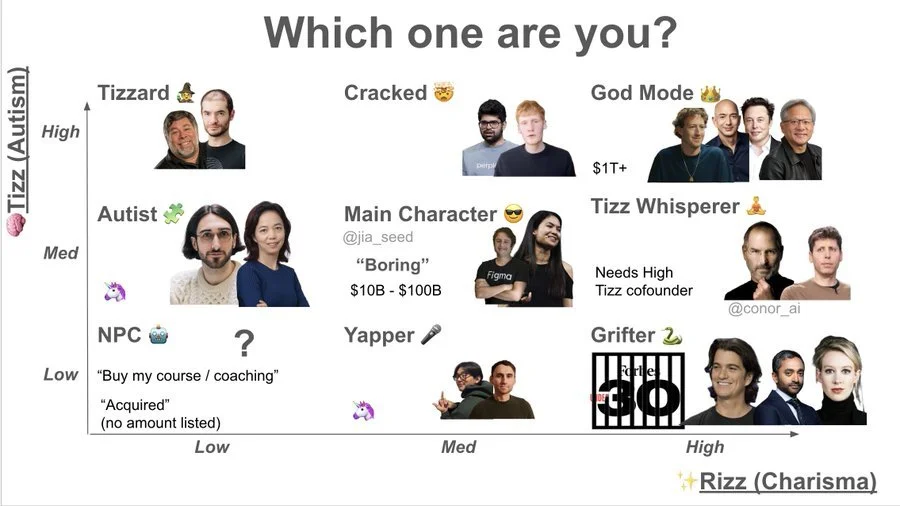
A rizz & tizz founder matrix that I stumbled across; cooked up by Conor (@conor_ai) and Jia (@jia_seed).
The Final Ingredient: Biz
While rizz and tizz are the core of our framework, there's a third essential element that my colleague Mike Wang suggested during a recent The Absurd Committee (our investment committee, since we strive to invest in the absurd before it becomes consensus). That third element is: biz, or business savvy. Does this person understand the levers of how their company works? Do they have financial literacy and business sense? Can they translate capital into a business that creates real value?
At the end of the day, venture capital is still a serious investment, and we still need people who know how to grow something that will create significant value.
At Long Journey, we chase the magically weird. We're looking for founders who are independent thinkers with the boldness to pursue ideas on the fringe. Rizz and tizz gives us a language to identify these founders while still maintaining rigor in our evaluation process.
The venture capital industry has traditionally underappreciated the value of neurodivergence, and we believe that's a massive miss. The founders who are going to build the future are the ones who make us uncomfortable and challenge our assumptions.
When we find someone with both magnetic leadership and unconventional thinking–someone who makes us want to drop everything to join their mission while simultaneously questioning all of our assumptions–that's when we know we've found something special. That's when we become the second believer.